
Quick answer
Visiting is possible, but only on a mandatory, pre-arranged tour — there is no single gate entrance fee, and independent access is not permitted. The area technically has no closing time, listed as 00:00–23:59 daily, because timing is dictated by convoy logistics and escort arrangements rather than opening hours. Heat, terrain and border proximity make organised travel the condition of entry.
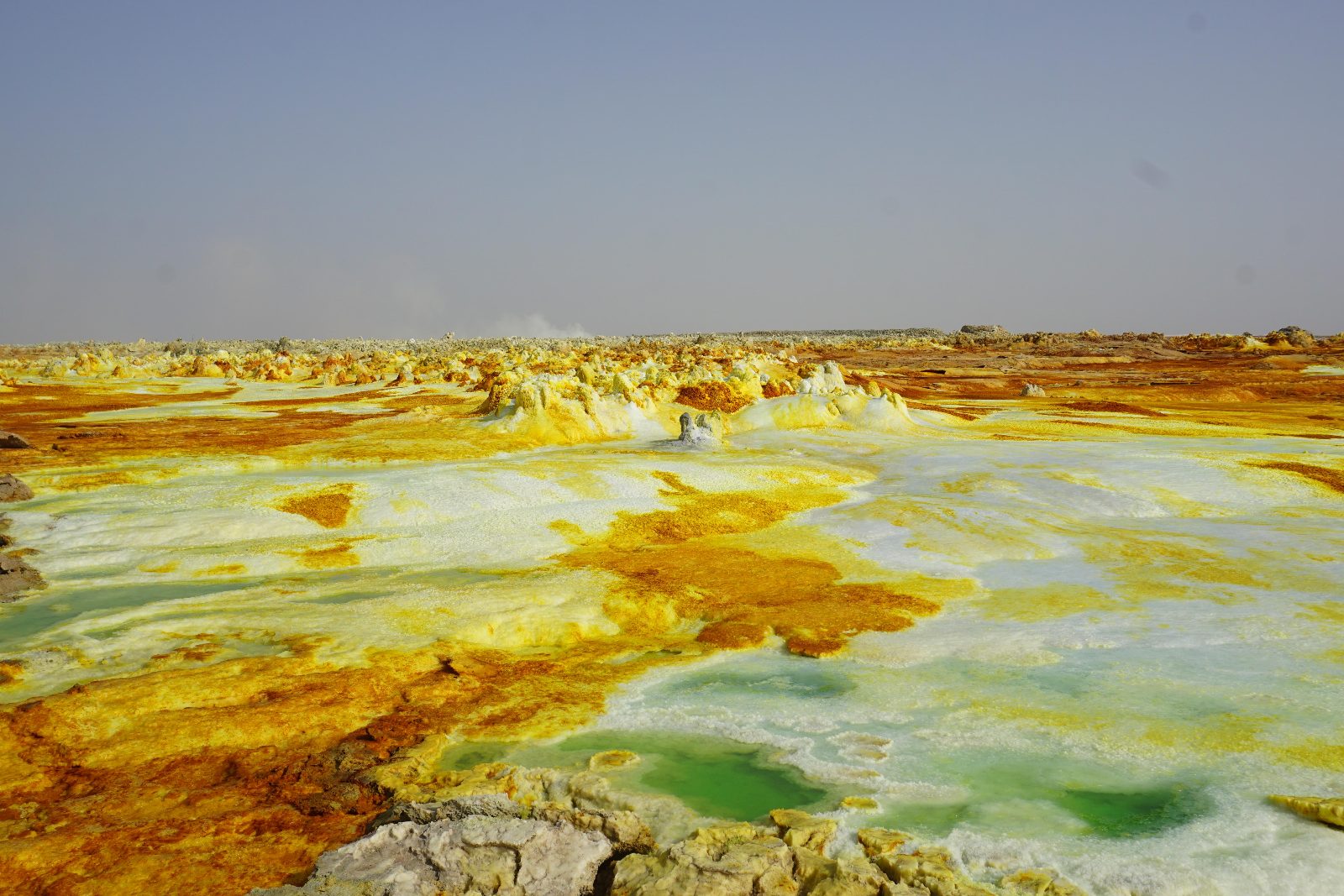
The lowest point of the Danakil sits roughly 125 metres below sea level, and the salt flats around Lake Asale have been worked by Afar caravans for centuries — camel trains still cut blocks of halite by hand and haul them toward Berhale and Mekele. That living industry, not tourism, is what shapes the region's rhythm. Visitors arrive as guests inside a working landscape, and the rules reflect that. The honest answer to is danakil depression safe depends less on the terrain than on the structure around it. Access to the Afar Region is controlled: travel is by organised convoy with local Afar guides and an assigned escort, and the arrangement is not optional. There is no ticket window, no turnstile, and no unaccompanied entry. Because of this, published hours of 00:00–23:59 across all seven days describe availability rather than a schedule — the real constraint is when a permitted group is cleared to move. Erta Ale's lava lake, the sulphur terraces at Dallol, and the salt pans each carry different conditions, and routes are adjusted or dropped without notice when authorities or operators judge the ground unsuitable. Proximity to the Eritrean border adds a further layer of oversight that most Ethiopian landmarks do not carry. The environmental risks are unusual but well understood by those who work there. Ground temperatures on the flats regularly exceed anything travellers will have experienced elsewhere. Dallol's acidic pools and crusted formations are unstable underfoot, which is why guides mark walking lines and visitors are asked not to leave them. Volcanic gas near Erta Ale can shift with wind direction. None of these are hidden hazards; they are managed ones, and the management is the reason the escort requirement exists at all. Anyone researching a danakil depression tour should treat operator quality as the main safety variable. Vehicle condition, water carried per person, guide experience with the Erta Ale ascent, and the operator's willingness to abandon a route all matter more than any general reputation the region has. Reputable operators publish their convoy arrangements and answer direct questions about escorts and contingency plans; vague answers are the signal to look elsewhere. Read this is danakil depression safe guide alongside the sections on timing, gear and getting there, then choose an operator on those specifics rather than on price alone. The region rewards preparation and punishes improvisation, which is precisely why improvisation is not permitted.
“The hazards here are not hidden — they are managed, and the escort requirement is the management.”
Is Danakil Depression Safe: Failure Modes to Avoid
The Danakil Depression is not a place you can safely improvise. Most incidents trace back to a handful of avoidable decisions made before the trip even starts.
Trying to reach the Danakil independently by rented car
Independent access is not permitted and not survivable without support. Book through a licensed operator running convoyed vehicles with a driver who knows the tracks — there is no single gate you can simply drive up to.
Skipping the mandatory Afar police escort or local guides
Armed escorts and Afar guides are a requirement, not an upsell. Confirm in writing that your operator includes regional permits, escorts and local guides before you pay a deposit.
Assuming Erta Ale's crater rim is a fixed, stable viewpoint
The lava lake level and rim stability change without warning. Stay behind the guide at all times and leave immediately when told to — do not walk out for a closer photo.
Underestimating heat load at 100+ metres below sea level
Ground temperatures routinely exceed anything most visitors have experienced. Drink continuously rather than waiting for thirst, and tell your guide at the first sign of headache, cramping or confusion.
Wandering off marked routes at Dallol's salt formations
The crust conceals acid pools and hollow ground that will not hold weight. Walk single file in the guide's footsteps and never approach a coloured pool for a photograph.
Booking on price alone from an unverified reseller
Cut-price trips usually cut escorts, vehicles or water. Check the operator is licensed in Ethiopia and ask exactly which vehicles, guides and support staff are on the itinerary.
How Is Danakil Depression Safe to Reach?
The Danakil Depression is located in the Afar Region of Ethiopia, an isolated landscape accessible only via organized 4x4 convoys. Travelers must utilize pre-arranged expeditions that coordinate vehicle transit and mandatory security protocols.
4x4 expedition from Mekele
4x4 expedition from Semera
Is Danakil Depression Safe During Different Seasons?
The period from November to February offers the most manageable temperatures for visiting the Danakil Depression. During these months, the intense heat is slightly reduced, making desert exploration physically safer.
November–February
ModerateCooler, highs around 30°C to 35°C
This window provides the most stable climate conditions for travel. Lower temperatures reduce the risk of heat-related illness during active trekking.
March–April
LightIncreasingly hot, often exceeding 40°C
Heat levels begin to rise significantly during these months. Travelers must exercise caution as midday temperatures frequently reach dangerous thresholds.
May–October
Very lowExtreme heat often exceeding 50°C
Summer months experience severe, life-threatening heat. Most operators limit or pause activities due to the extreme environmental risks present during this season.
Verdict: The safest window for visiting the Danakil Depression is between November and February when temperatures remain at their lowest annual levels.
Is Danakil Depression Safe with the Right Gear?
Gear is the part of Danakil safety you control yourself, and the list below runs from weeks out to the morning you set off.
-
Confirm vaccinations and malaria advice early — Some prophylaxis and immunisations need weeks of lead time before travel.
-
Assemble a heat-focused personal medical kit — Carry oral rehydration salts, painkillers, antidiarrhoeals, blister care and any prescription medicines.
-
Buy evacuation-inclusive travel insurance — Hospitals are hours away and remote retrieval is expensive without cover.
-
Pack loose long-sleeved cotton and headscarf — Covering skin beats exposing it when air temperatures sit above body temperature.
-
Bring sturdy closed boots for salt crust — Sharp salt formations and sulphur crust cut through sandals and thin soles.
-
Carry six litres water capacity per person — Sweat losses are constant; refill points are limited to what the tour carries.
-
Add high-SPF sunscreen, sunglasses, wide brim hat — Glare reflects off white salt flats from every angle.
-
Charge a headtorch and power bank — Night starts, dawn walks and no mains power make batteries a safety item.
Is Danakil Depression Safe if You Have Official Permits?
Access to the Danakil Depression is strictly regulated and requires professional logistical support. There is no individual entry fee for the region as all permits are bundled into mandatory tour arrangements.
Individual travelers pay 0 ETB for entry, with total costs determined solely by the comprehensive tour package required for regional safety and access.
Check availability
Frequently asked questions about is danakil depression safe
Everything you need to know about is danakil depression safe